The Listening Nest Box

Bird sounds

BirdNET-Pi listens through the outdoor microphone, recognises bird songs with the BirdNET neural network and keeps a log with a web interface.

Setup

  1. Plug the USB microphone into the Pi and check that it is found: arecord -l.
  2. Install BirdNET-Pi by following the README of the project. I used the maintained Nachtzuster fork, which runs on a Pi 5 with the 64-bit OS.
  3. Open the web interface, set your location (only used to filter species) and choose the microphone.
  4. Set a password for the web interface right away.

First result

With the microphone on the outside, BirdNET-Pi picked up wild birds around the house from day one, including great tit (Kohlmeise), short-toed treecreeper (Gartenbaumläufer) and wren (Zaunkönig).
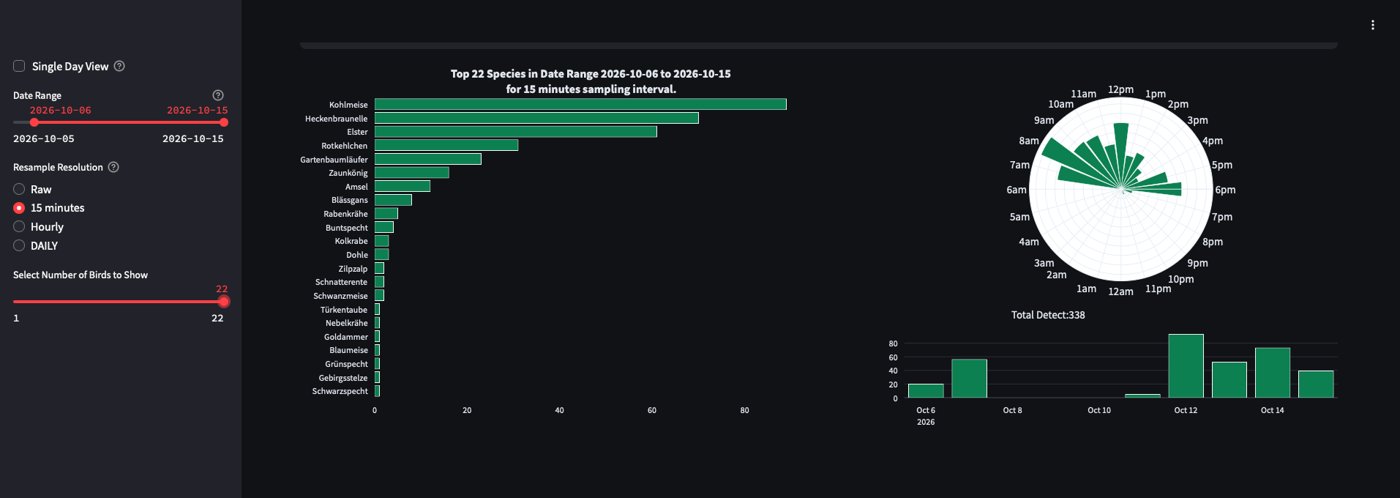
BirdNET-Pi species statistics for 6 to 15 October 2026: a bar chart of the most frequent species with Kohlmeise on top, a circular chart of detections by hour of the day and a bar chart of detections per day
BirdNET-Pi species statistics, 6 to 15 October 2026: 338 alleged detections. Most frequent: Kohlmeise (great tit), Heckenbraunelle (dunnock), Elster (magpie), Rotkehlchen (robin) and Gartenbaumläufer (short-toed treecreeper).
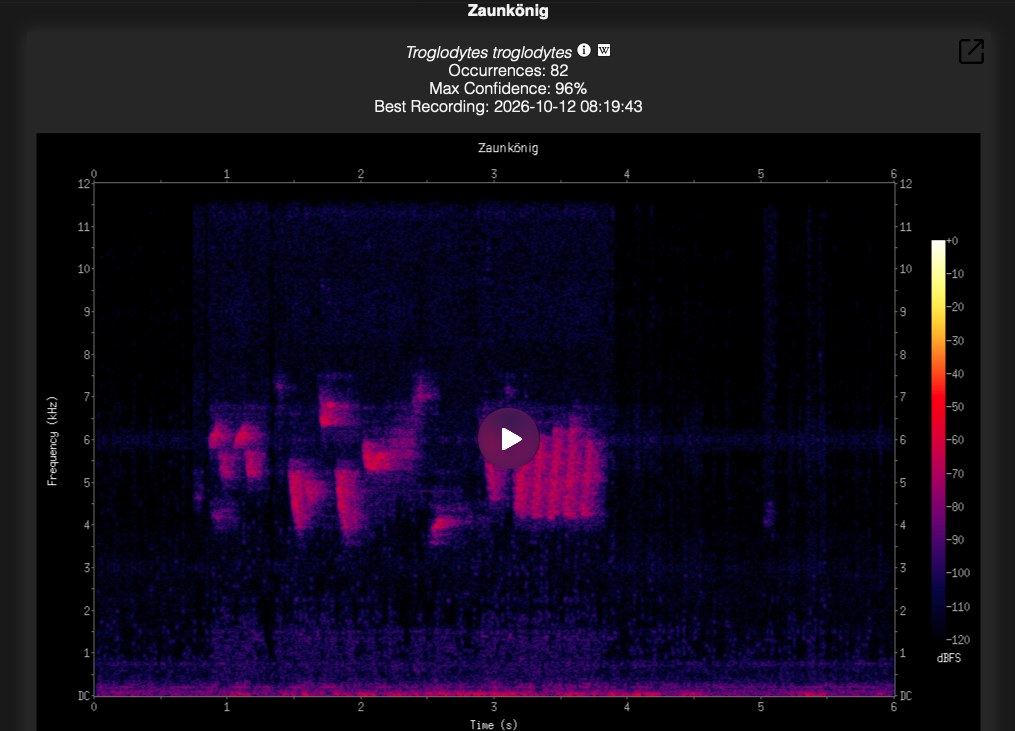
BirdNET-Pi spectrogram of a wren (Zaunkönig, Troglodytes troglodytes) recorded on 12 October 2026: six seconds of song with bright bars between 4 and 7 kilohertz, 82 detections, best confidence 96 percent
A wren, as BirdNET-Pi shows it: 82 detections, best confidence 96 percent (12 October 2026). The spectrogram reads left to right as time, bottom to top as pitch, and the colour shows how loud it is. The play button in the picture is only a screenshot; use the player below.

Listen to the same recording (6 seconds, wren, 12 October 2026, 08:19):
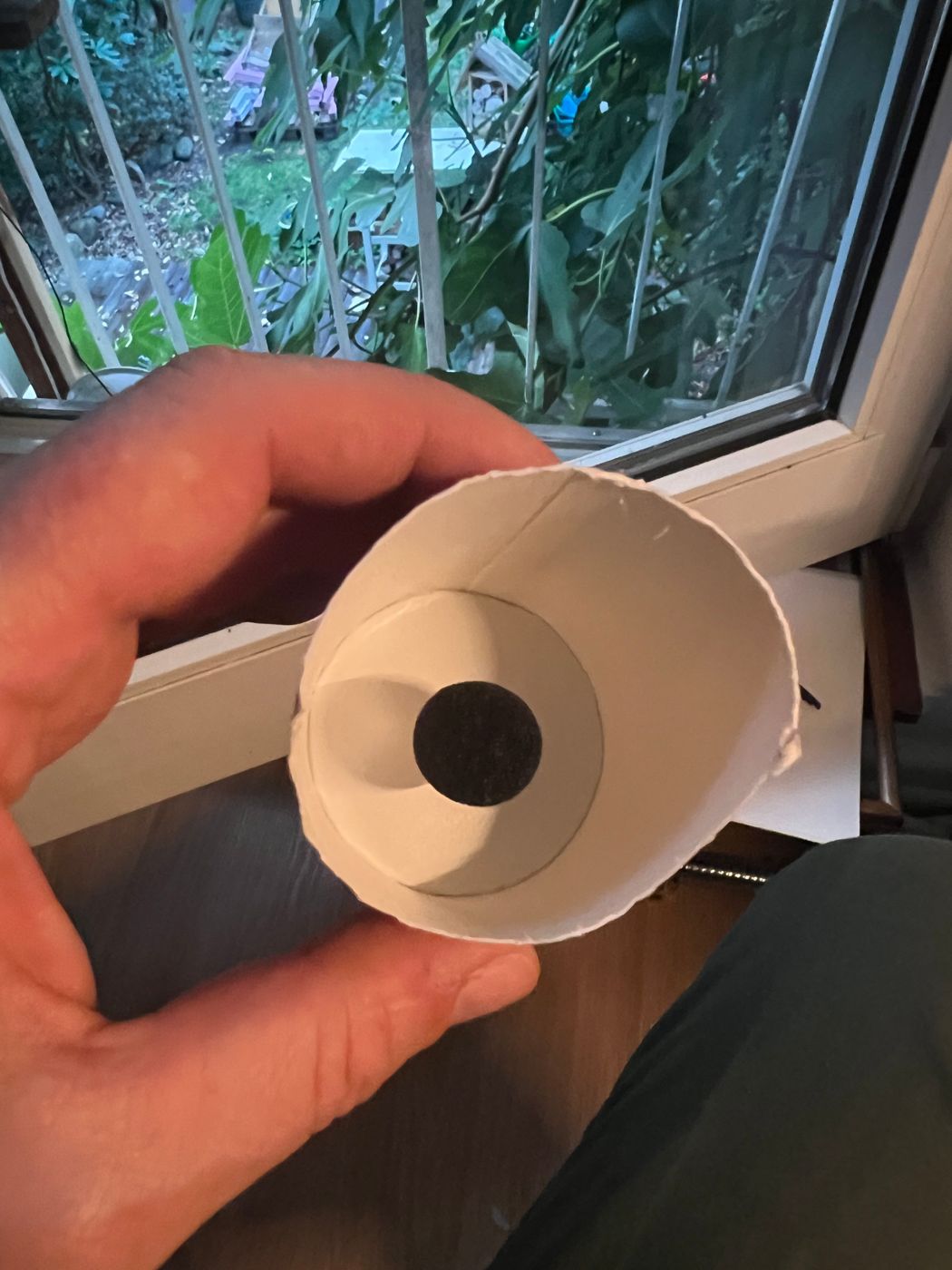
Looking into a cut-down cup: the round black microphone capsule sits at the bottom, a hand holds the cup
The microphone capsule at the bottom of a cut-down cup, which works as a small rain shield.
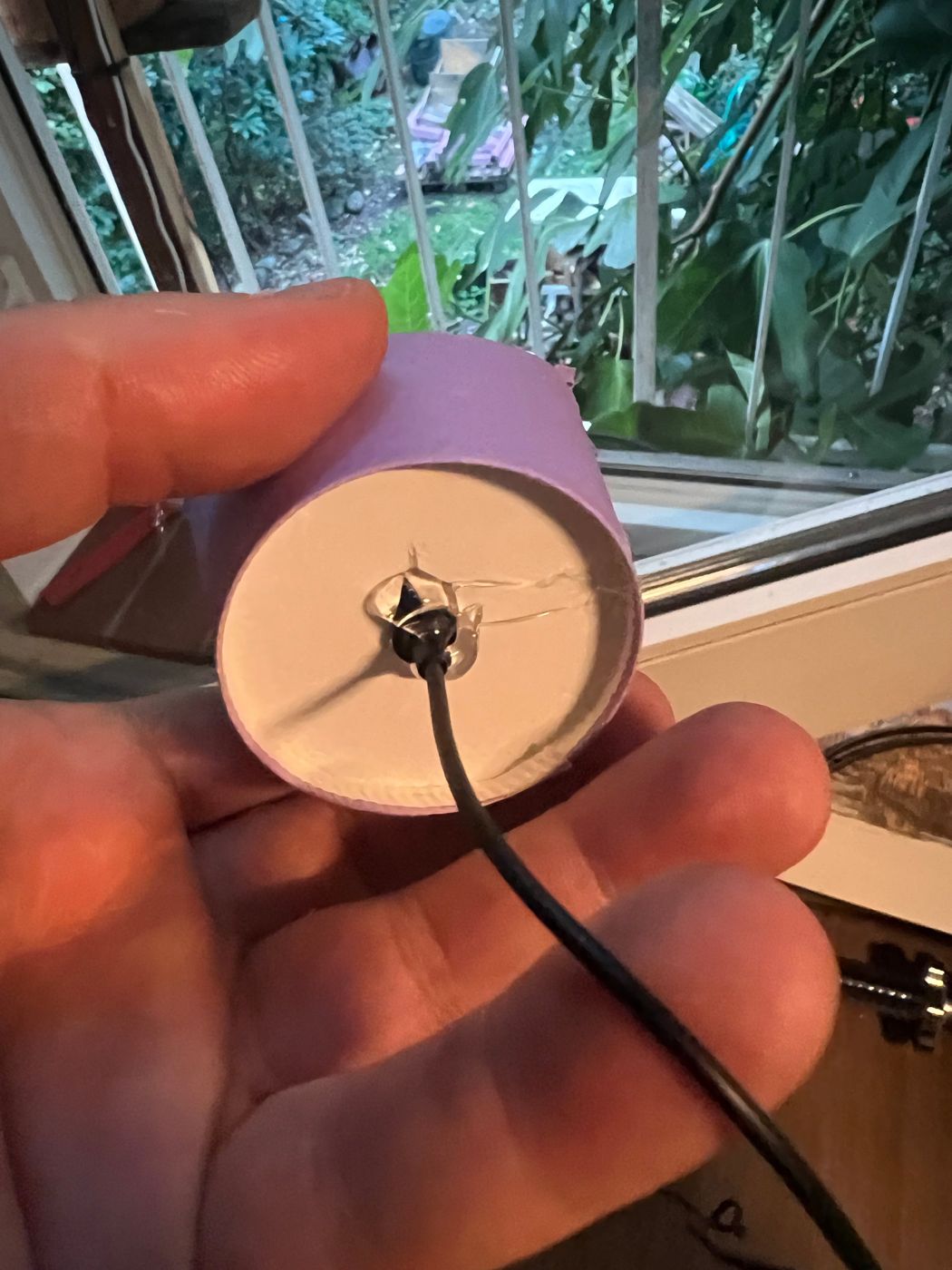
The outside bottom of the purple cup: the thin microphone cable passes through a small hole sealed with hot glue
The cable leaves through a small hole in the bottom, sealed with hot glue.

Why the microphone is not inside

Inside the box it would mostly record the camera's and the birds' own rustling. Outside it hears the whole neighbourhood, which is the point of the species log.